Many HME providers still manage inventory with processes that were acceptable years ago but increasingly fall short of how inventory actually moves today. Periodic counts, manual reconciliation, spreadsheets, phone calls, and billing-system workarounds may keep the operation moving, but they do not give teams the level of control modern HME operations require.
Stronger inventory operations depend on continuous visibility into what inventory exists, where it is, what state it is in, who has custody, and whether it is actually available for deployment. That is what moves inventory management from reactive correction toward inventory optimization.
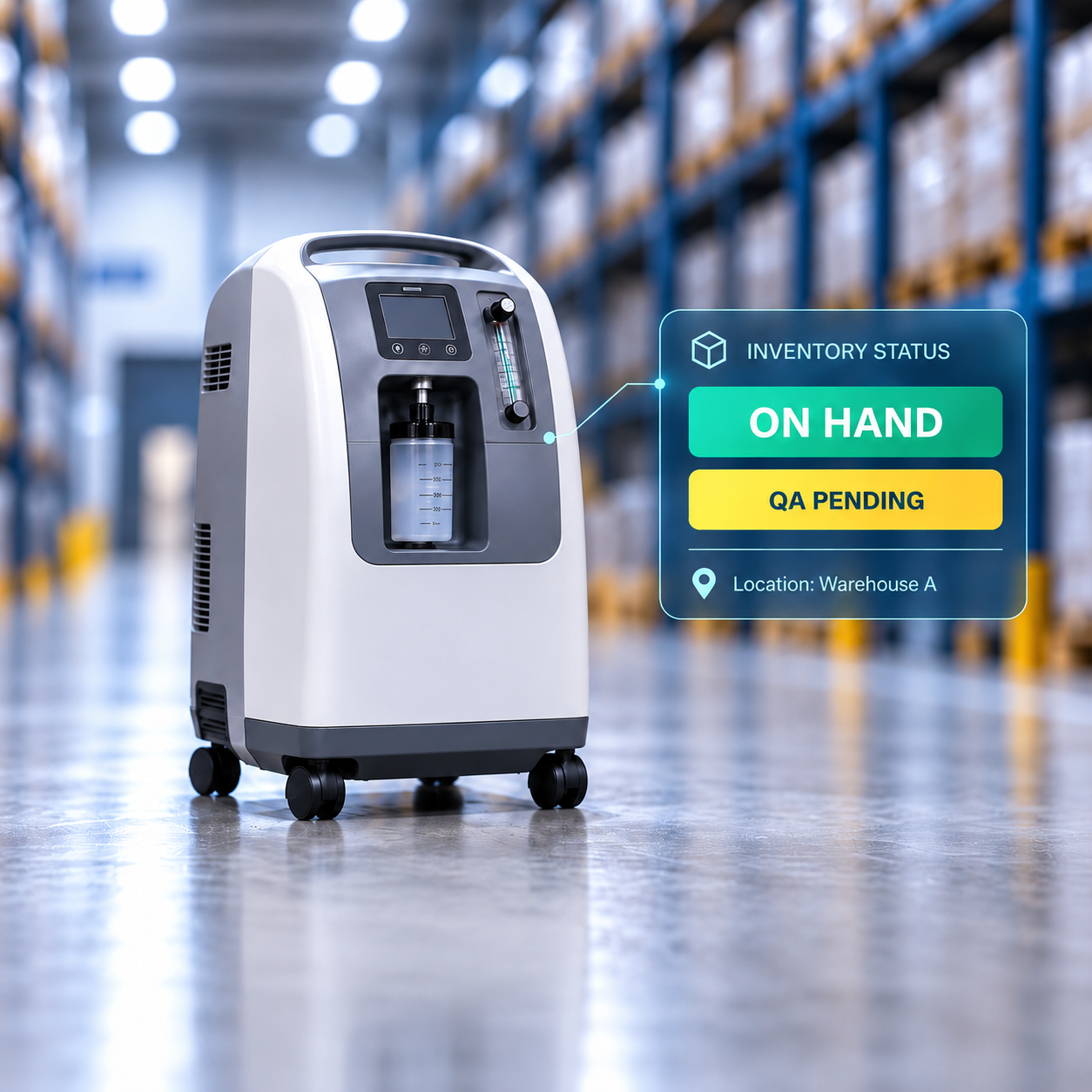
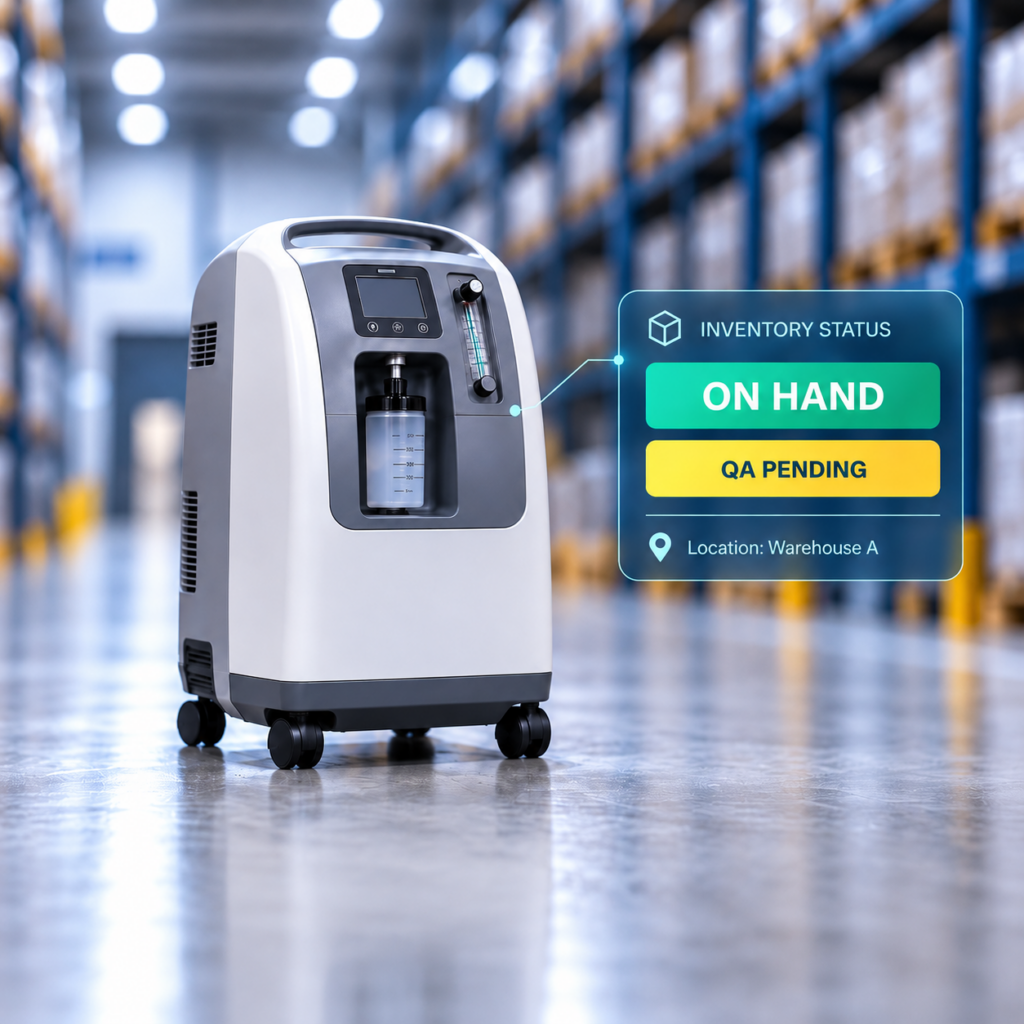
Consider a common HME example. An oxygen concentrator may show as “on hand” even though operations cannot deploy it to the next patient. It may be dirty, waiting for QA, under repair, loaded on a delivery vehicle, or physically returned while the system still reflects an earlier transaction.
Location and availability are not the same thing. An asset can be physically on site and still be unavailable for patient use.
Why the Old HME Inventory Model Is Falling Short
Traditional inventory management often follows a familiar pattern: count inventory, reconcile discrepancies, correct the records, and repeat.
That model struggles in HME because serialized assets move through receiving, storage, delivery, pickup, cleaning, QA, repair, and redeployment across warehouses, branches, vans, closets, and field locations. Each movement creates another opportunity for location, custody, or product state to fall out of sync.
Accuracy problems can also start at receiving, where wrong quantities, serial numbers, item identifiers, or units of measure carry downstream into later decisions.
In fact, a 2025 survey of HME leaders by in90group found that 86% still rely primarily on manual inventory counting, while only 10% consider their inventory operations fully optimized. [Link to research insight]
A physical count may expose a mismatch, but it does not prevent the next one. Modern inventory operations need controls that stay with inventory as it moves.
Operational Visibility Has Become the Baseline
Knowing how many units are “on hand” no longer tells operations enough. Teams need reliable answers to a more useful set of questions:
- What inventory do we own?
- Where is it right now?
- What operational state is it in?
- Who has custody?
- Is it actually available for deployment?
Quantity without context creates false confidence. Ten concentrators “on hand” do little good if several sit in repair, wait for QA, ride on trucks, or cannot be located.
If staff still have to call a warehouse, walk the floor, or search a spreadsheet before they can answer a basic availability question, visibility is still fragmented.
Inventory Control Extends Beyond the Warehouse
More than three-quarters of surveyed HME providers maintain inventory in the field. Vehicles, technician inventory, consignment closets, facilities, and remote locations all belong to the same inventory network.
When providers leave those locations outside normal inventory controls, technicians keep extra equipment in vans, branches reorder products they may already own elsewhere, and teams replenish closets based on what they see instead of what the data shows.
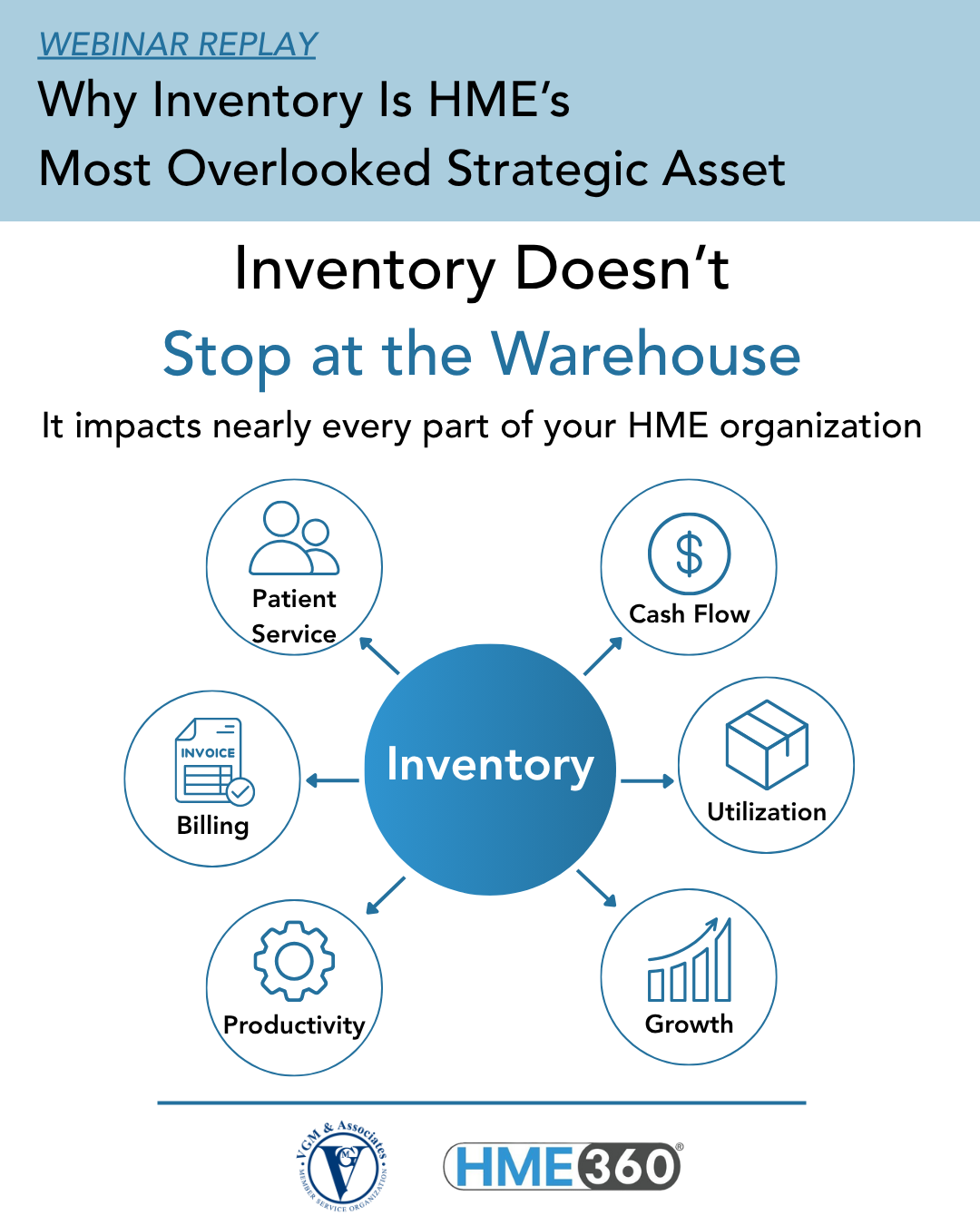
Those workarounds create underused assets, unnecessary purchases, trapped cash, and weak accountability across the network.
Modern inventory operations track not only where an asset is, but which technician, vehicle, or team has custody.
Handoffs Have Become a Core Accuracy Control
Many inventory discrepancies develop at handoffs. Staff receive equipment before updating the system. A concentrator moves between warehouses without a completed transfer. A technician loads an asset onto a truck without recording custody. A returned item enters QA while the system still shows it somewhere else.
Stronger operations build the correct inventory update into the workflow itself.
Barcode scanning verifies item and serial-number capture during receiving, transfers, truck loading, and delivery. Mobile workflows capture activity where it happens. RFID identifies tagged assets quickly and, in the right workflow, tracks location or product-state changes with less manual effort.
When each movement updates the inventory record as part of the workflow, teams preserve accuracy and can flag unresolved transfers, missing assets, and unexpected product states while the details are still fresh.
Continuous Verification Is Replacing Delayed Reconciliation
Traditional physical inventories often happen once or twice a year because they consume too much time to perform more often. By the time a discrepancy surfaces, the underlying event may have happened weeks or months earlier.
Frequent cycle counting shortens that gap. Teams catch discrepancies closer to the event that caused them, while staff still remember what happened, and operations can still correct the issue.
Technology makes that practical. For example, HME360 customers have reduced full warehouse counts to about five minutes and shifted from infrequent physical inventories to multiple cycle counts each week. In one customer operation, counting labor fell by 95%.
Frequent cycle counting reduces reliance on disruptive full inventories and helps teams investigate discrepancies while the underlying activity is still recent, though some providers will still perform periodic true-ups for audit or financial controls.
Trusted Data Is Changing Replenishment and Purchasing
When staff do not trust the numbers, they compensate. Warehouse teams carry extra stock, technicians keep equipment in vans, and purchasing teams order “just in case.”
More mature operations use trusted transaction data to set location-specific PAR levels, monitor consumption, rebalance stock across branches, and check whether usable equipment already exists elsewhere before placing another order. That logic only works when inventory balances, units of measure, and transaction data are accurate.
Sometimes the right decision is a transfer, not another purchase order. Better replenishment reduces excess inventory, improves asset utilization, and frees cash that would otherwise sit on shelves, in closets, or in vehicles. The same principle applies to non-serialized supplies, where accurate quantity and consumption data matter more than individual asset tracking.
Inventory Technology Has Advanced Beyond the Billing System
Many HME providers still rely on a billing system, ERP, or EHR as their primary inventory system. Those platforms manage patient transactions, claims, equipment assignments, and revenue-cycle workflows.
Operational inventory management handles a different job. Modern HME inventory technology tracks physical location, product state, custody, transfers, cycle counts, replenishment, and availability across the inventory network. It complements the billing system by adding the operational visibility and automation needed between transaction events.
Strong technology environments connect the two, so physical inventory activity and transactional records stay aligned.
Inventory Optimization Is Turning Chaos Into Control and Strategic Advantage
Reactive teams spend time counting, searching, reconciling, correcting, and ordering around uncertainty. Optimized operations see inventory across locations, capture handoffs as they happen, verify inventory frequently, rebalance before purchasing, and focus staff on exceptions.
That shift reduces manual work, improves asset utilization, frees cash tied up in excess inventory, and gives teams more confidence that product will be available when patients and partners need it.
The exact implementation will vary by provider, but the direction is the same: better visibility, tighter control, and workflows that reflect how inventory actually moves. As HME operations add locations and complexity, the cost of managing inventory reactively only grows.
How to Assess and Improve Your Inventory
We created the HME360 Inventory Optimization Playbook to help HME leaders assess where their operation stands and identify the process to move from traditional inventory management to a more modern approach that optimizes inventory operations, so they can gain greater visibility, control and inventory confidence.